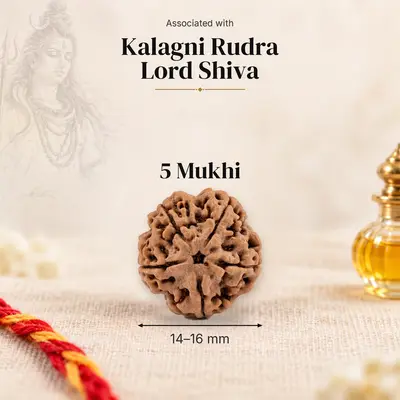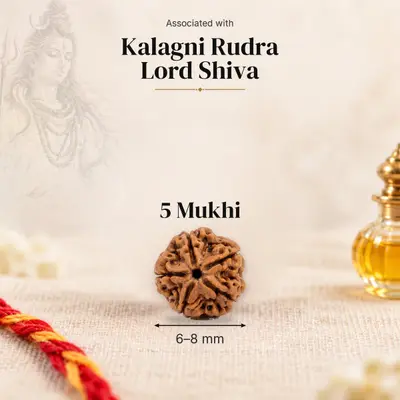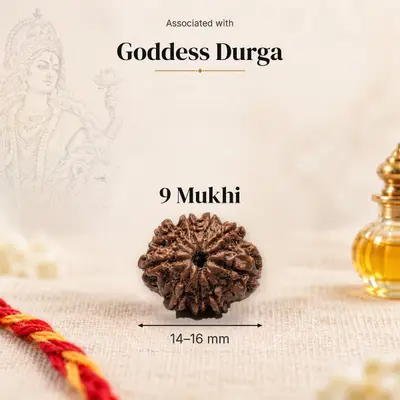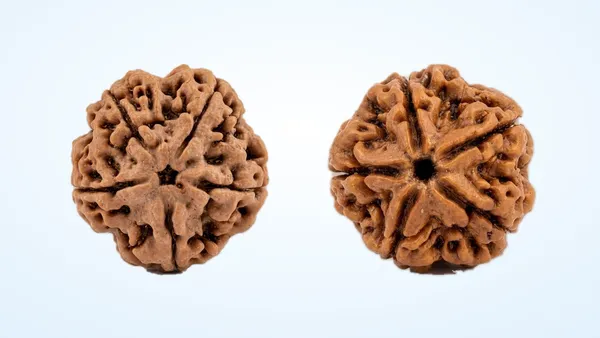
How Rudraksha size is measured
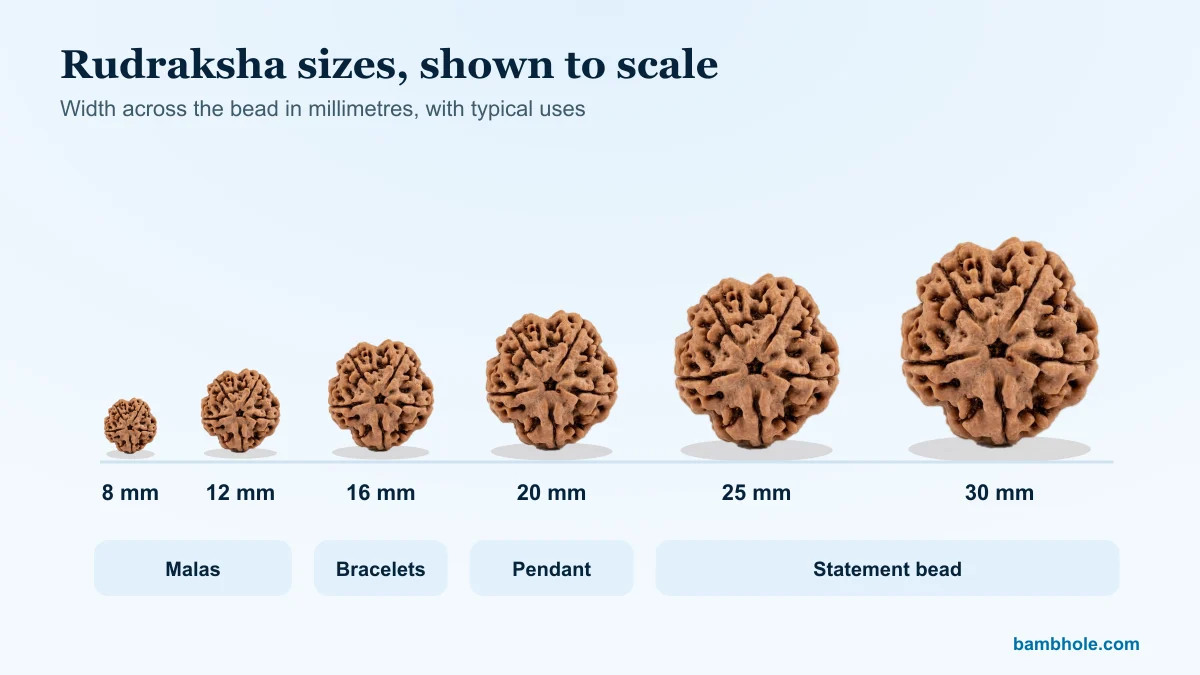
Size is the width of the bead measured across its widest point, in millimetres. Because every bead is natural, shops sell beads in size ranges such as 14–16 mm rather than exact sizes. When a bead is lab tested, its report records its exact dimensions in millimetres and its weight in carats, so you can compare the bead you receive with the record. Our guide to reading a lab report explains those fields.
Size ranges by origin
| Bead | Sizes listed on Bambhole |
|---|---|
| 5 Mukhi, Indonesian (Java) | 6–8 mm to 18–20 mm |
| 5 Mukhi, Nepal | 14–16 mm to 30–32 mm |
| Gauri Shankar, Indonesian (Java) | 6–8 mm to 24–26 mm |
| Gauri Shankar, Nepal | 14–16 mm to 38–40 mm |
Indonesian (Java) beads are naturally small and dense; Nepal beads start larger. That is why Java beads are favoured for bracelets and malas and Nepal beads for single beads. See Nepal vs Indonesian Rudraksha.
How size affects price
For the same mukhi and origin, a larger bead usually costs more, because large beads are rarer. A 5 Mukhi Nepal bead, for example, costs ₹15 in its smallest listed size (14–16 mm) and ₹15,000 in its largest (30–32 mm). For rare mukhis the gap between sizes can be very large.
Which size for which use
| How you will wear it | Typical size | Why |
|---|---|---|
| Japa mala (108 + 1 beads) | About 6–10 mm | Keeps the mala light enough to hold and wear. |
| Bracelet | About 8–14 mm | Sits comfortably on the wrist without catching. |
| Pendant or single bead on a thread | About 14–20 mm | Visible, with lines easy to see, yet comfortable all day. |
| Statement bead or puja | About 20 mm and above | A bold single bead, often kept on the altar. |
These are common choices, not rules. Comfort matters most: a bead you are happy to wear every day is the right size.
Is a bigger Rudraksha more powerful?
No. In tradition, the meaning of a Rudraksha comes from its mukhi and its natural form, not from its size. A larger or more expensive bead does not carry a greater spiritual benefit; it is simply rarer and more visible. Spiritual effects are traditional beliefs, not promises.
Practical tips
- Hold a ruler against your wrist or chest to picture the size before you buy.
- For a bracelet of several beads, choose one size range so the beads sit evenly.
- Heavier beads need a stronger thread or a metal setting.
- Check the product page for the exact size ranges and prices available today.
Browse all Rudraksha beads and choose your size on each product page.
Questions people ask
How is Rudraksha size measured?
As the width across the widest point of the bead, in millimetres. Beads are sold in ranges such as 14–16 mm, and a lab report records the exact dimensions.
Does Rudraksha size matter?
Size affects price, appearance and comfort. It does not change the mukhi or its traditional meaning, and a bigger bead is not spiritually stronger.
What size Rudraksha is best for a bracelet?
Beads of about 8–14 mm are the most comfortable for a bracelet. Indonesian (Java) beads are popular for bracelets because they are small and dense.
Why do bigger Rudraksha cost more?
Large beads of the same mukhi and origin are rarer, so they are priced higher.
Spiritual associations described here come from tradition. They are not medical claims or promises of a particular result.