What a fake Rudraksha usually is
A "fake" Rudraksha is rarely a crude plastic copy. Most problems fall into a few patterns, and all of them are designed to make a cheap bead look like an expensive one:
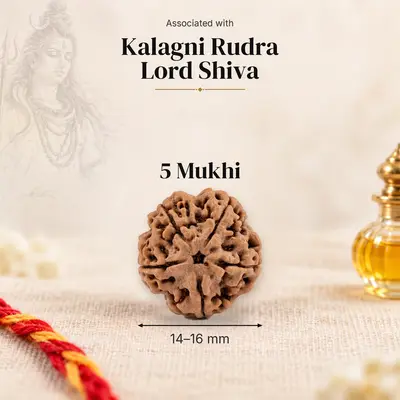
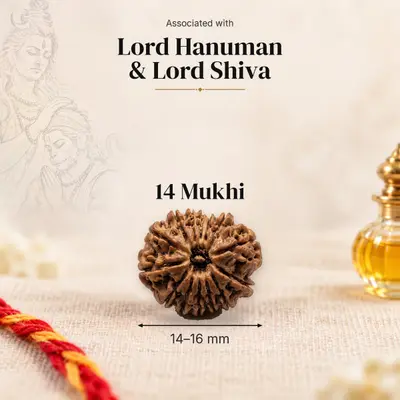
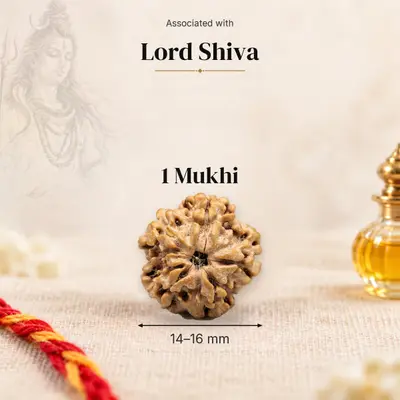
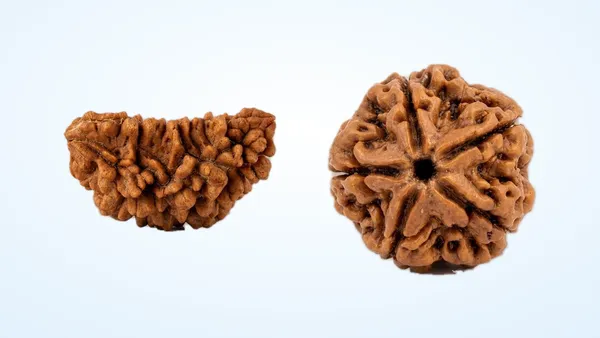
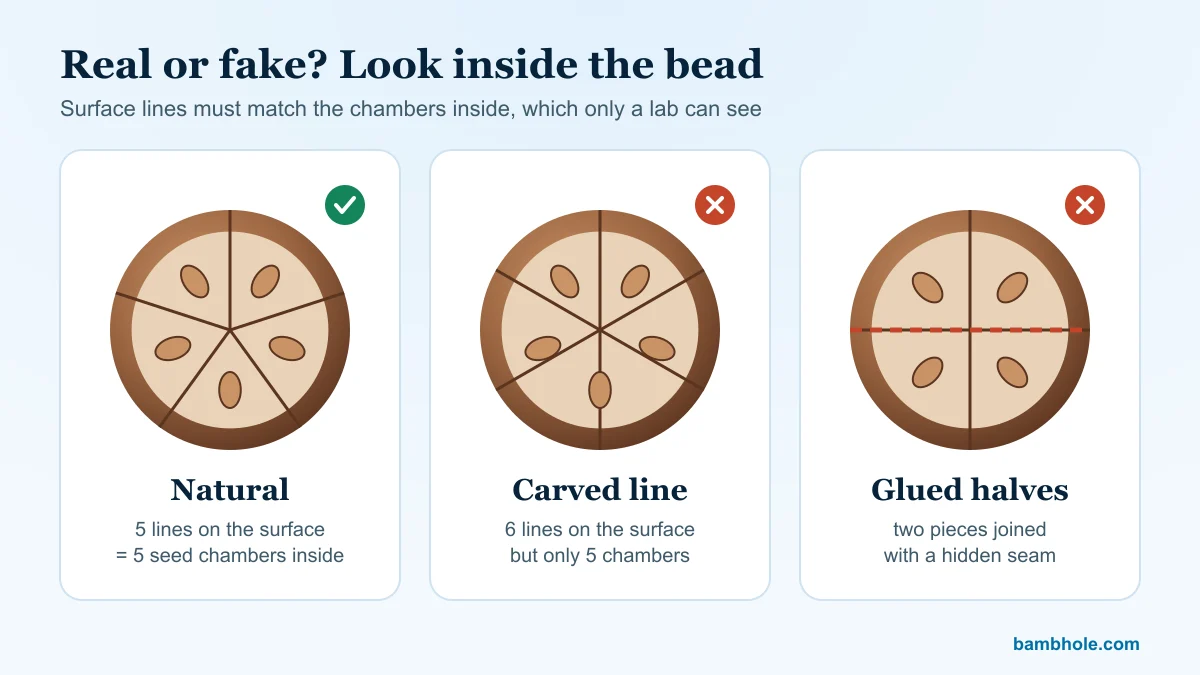
- Carved extra lines. A common bead, often a 5 Mukhi, has one or more lines cut into its surface so that it passes as a rarer, higher mukhi.
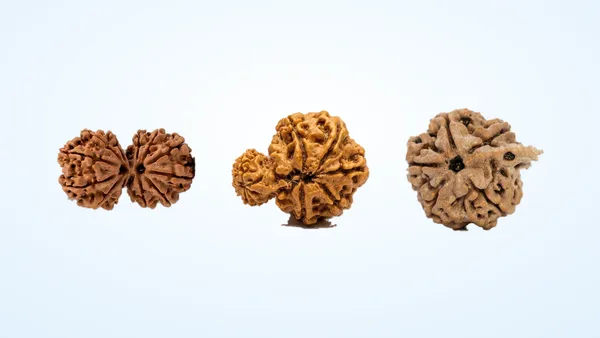
- Joined beads. Two beads, or pieces of beads, are glued together to imitate a naturally joined Gauri Shankar or to create a "rare" shape.
- Look-alike seeds. Seeds from other trees that resemble Rudraksha are sold under its name.
- Moulded copies. Resin, wood or other materials are pressed into a bead shape. These are the easiest to spot.
- Treated beads. Real beads that are dyed, filled or polished to hide damage or to look older.
Why looking at the surface is not enough
Each natural mukhi line on a Rudraksha corresponds to a seed chamber inside the bead. A 5 Mukhi bead has five lines on the outside and five chambers on the inside. A skilled carver can add a convincing line to the surface, but cannot add a chamber behind it. In the same way, a good glue joint can be almost invisible from outside while being obvious inside. That is why the decisive check has to look into the bead, not at it.
What you can check at home (a first screen, not proof)
These checks can help you spot a poor fake or ask better questions. A bead that passes all of them can still be altered.
Follow every line from end to end
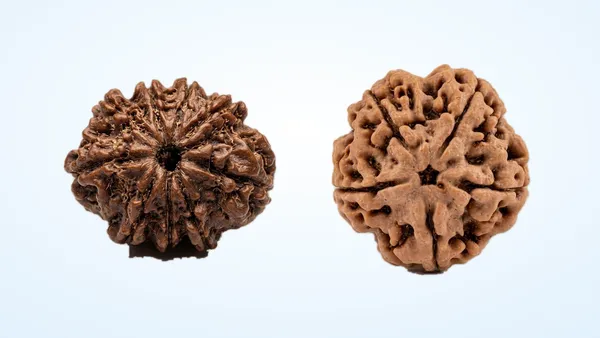
Natural mukhi lines run from the top of the bead to the bottom, following its curve, with a fairly even depth. A carved line may look sharper or cleaner than its neighbours, stop short, wander, or break through the natural bumps on the surface instead of running between them.
Look closely at the surface
Natural beads have an irregular, organic texture, and no two are identical. Repeating patterns, a plastic-like shine, or a seam running around the bead are warning signs.
Check joins on two-bead forms
On a Gauri Shankar or Garbh Gauri, look at the point where the beads meet. Residue, a perfectly straight seam or a colour change at the join are reasons to ask for a lab report before you buy.
Compare against the paperwork
If the bead comes with a report, weigh and measure it if you can. The numbers should match the report, as explained in our guide to reading a GJSPC lab report.
The home tests that do not work
- The water test. Whether a bead sinks or floats depends on its density, age and moisture. Genuine beads can float and fakes can sink.
- The copper coin test. A bead held between two coins may turn, but the movement comes from the hands and the balance of the coins, not from the bead.
- The milk test. Soaking a bead in milk proves nothing and can leave residue in the grooves.
- Boiling. Some sellers recommend boiling a bead to see whether it falls apart. It can crack a genuine bead, and a well-made fake may survive it.
Our Rudraksha myths vs facts guide covers these and other popular beliefs in more detail.
The reliable method: an independent lab report you can verify
A meaningful test has three parts. The laboratory must be independent of the seller. It must examine the inside of the bead, so that the number of chambers can be compared with the lines on the outside and any joins become visible. And it must issue a report for that one bead, with its own number, that you can look up on the laboratory's own website.
GJSPC, the Gem & Rudraksha Testing Laboratory in New Delhi, works this way. Its reports can be checked at gjspc.in/ReportCheck. Our page on lab certified Rudraksha explains what the laboratory looks at and how its internal examination works.
How to check a report in two minutes
- Find the report number on the report card or the product page.
- Type gjspc.in/ReportCheck into your browser yourself, rather than following a link someone sends you.
- Enter the number exactly as printed.
- Compare the identification, weight, dimensions, number of faces and origin with your bead. The weight is recorded to two decimal places, which makes it the hardest detail to fake.
Red flags when buying Rudraksha anywhere
- The seller cannot give you a report number before you buy.
- The report number returns nothing on the laboratory's website.
- The weight or size in the online record does not match the bead.
- One report is used for a whole batch of beads.
- The "laboratory" is the seller itself, or has no public report check.
- A rare mukhi is offered at the price of a common one.
How Bambhole handles authenticity
Every Bambhole Rudraksha is lab tested by GJSPC, and every bead has its own unique report number that you can verify on GJSPC's website. Printed report card: free on beads from ₹1,000; ₹150 below that. If a recognised independent institution or professional ever finds that a bead is not authentic, our lifetime money-back authenticity guarantee refunds everything you paid, including shipping.
You can browse all lab-tested Rudraksha beads or start with the most widely worn bead, the 5 Mukhi Rudraksha.
Questions people ask
What is the most reliable way to check if a Rudraksha is real?
An independent laboratory report for that specific bead, with a unique number you can look up on the laboratory's own website. The lab examines the inside of the bead, where carved lines and glued joins become visible.
Does a real Rudraksha sink in water?
Not necessarily. Sinking or floating depends on the bead's density, age and moisture, so genuine beads can float and fakes can sink. The water test proves nothing.
Can a Rudraksha be fake even with a certificate?
Yes, if the certificate comes from the seller or from a laboratory with no public report check, or if one report covers many beads. Verify the number yourself on the laboratory's website and compare the weight and size with your bead.
What is the most common Rudraksha fake?
Extra lines carved into a common bead, often a 5 Mukhi, so that it passes as a rarer mukhi. Glued beads that imitate naturally joined forms such as Gauri Shankar are also common.
Spiritual associations described here come from tradition. They are not medical claims or promises of a particular result.